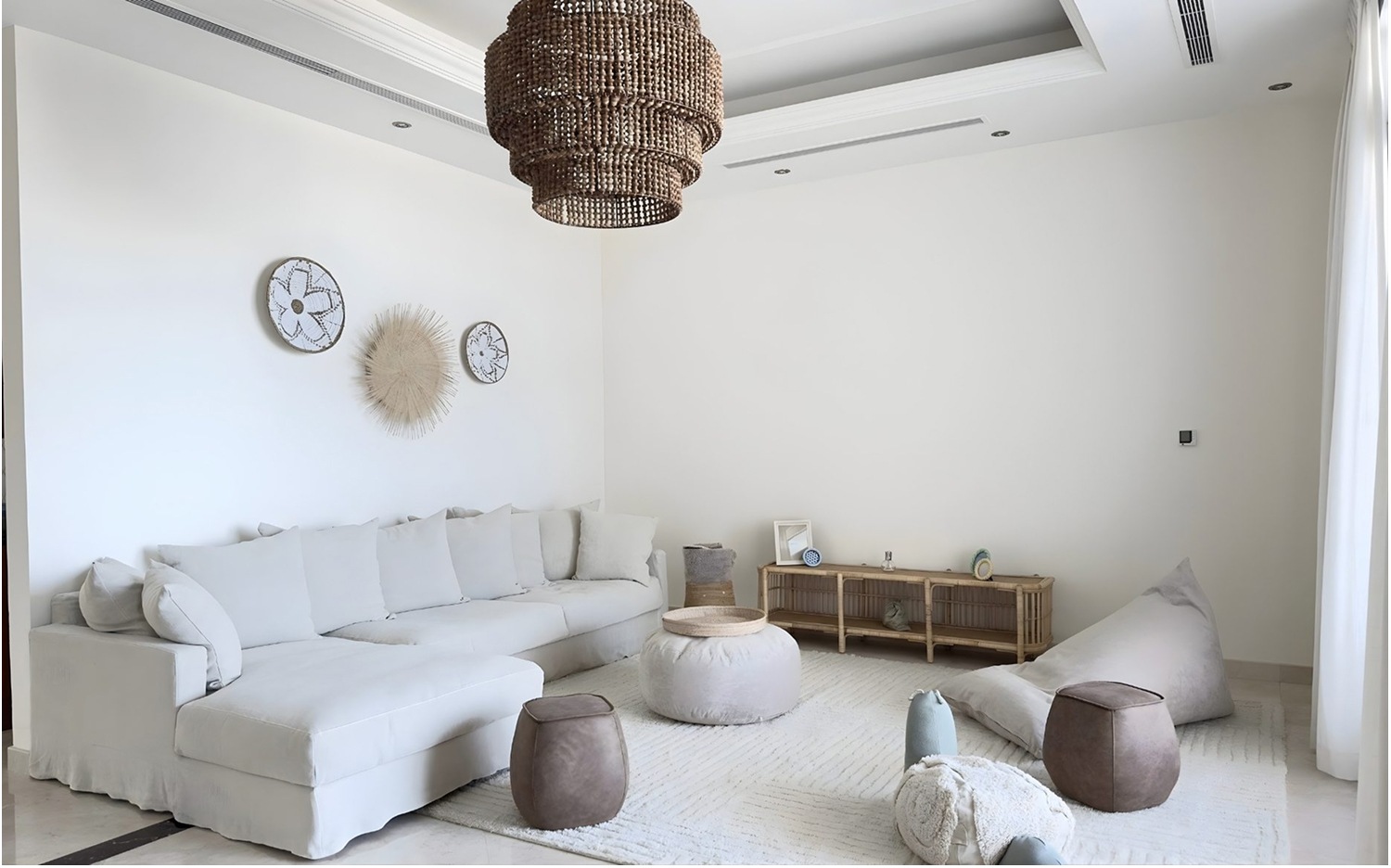
Many Dubai villas were designed for lifestyles that no longer reflect how people live today. Formal reception rooms, closed layouts, heavy finishes, and decorative arches were once common. In daily use they often feel restrictive. Spaces are disconnected, natural light is poorly distributed , and moving through the home takes effort rather than feeling natural.
Renovation, in this context, is a process of correction. The most effective villa renovation ideas respond to how people actually live today, reshaping homes that were designed around formality into spaces that support daily movement, light, and connection. Living, working, resting, and spending time together now happen across the same spaces, and the design of the home needs to reflect that shift.
Seen this way, villa interior design becomes a series of deliberate decisions. Renovation in Dubai starts by questioning outdated assumptions about space and replacing them with layouts and finishes that align with life now. Each change responds to how the home is used today, improving comfort and connection in practical, everyday ways.
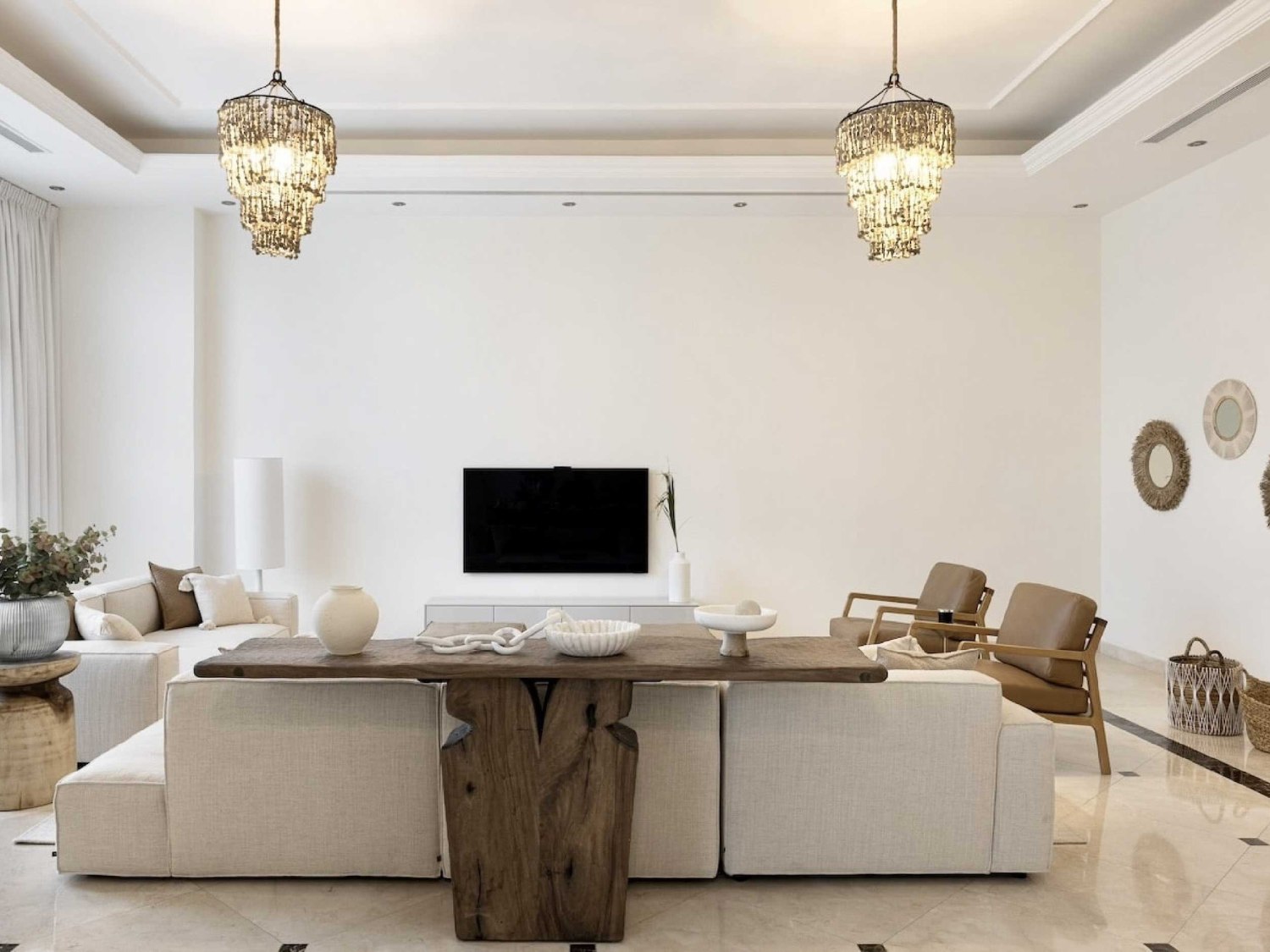
Older villas often struggle with layout rather than size. Many were planned around formal living rooms that sit unused, narrow corridors that interrupt movement, and a series of small rooms with little relationship to each other. Daily life ends up compressed into a few areas, while the rest of the house feels detached or underused.
Rethinking the layout starts with flow and hierarchy. Spaces need to relate to how people move through the home during a normal day, not how guests expected to be received years ago. When visual barriers are reduced and circulation is clarified, rooms begin to relate to one another more naturally. Light travels more freely, sightlines open up, and daily routines require less effort.
In many Dubai homes, this approach suits both lifestyle and climate. Well-structured layouts help manage strong natural light and support a more relaxed way of living that shifts throughout the day. In villa renovation, the focus is not on choosing between open or closed living, but on designing spaces that work together, with each area serving a clear purpose in everyday life.
In many villas, outdoor areas exist, but are treated as separate zones rather than part of daily life. For much of the year, especially during summer, spending long hours outside is unrealistic. This makes it even more important for these spaces to feel visually and spatially connected to the interior, rather than designed for constant use.
When outdoor areas read as extensions of the home, they contribute even when they are not actively occupied. A shaded terrace, a planted edge, or a softly lit garden can become part of the interior experience when seen through large openings or sliding doors. The view, the light, and a sense of openness add depth to interior spaces without positioning outdoor living as a primary lifestyle.
Visual continuity is critical. Aligning materials, tones, and finishes across thresholds blurs the line between inside and out. Shaded edges and transitional zones soften the shift between environments and support airflow without exposing the home directly to heat. In well-considered homes, outdoor areas support the interior quietly, adding calm and balance in a way that suits Dubai’s climate and the rhythms of everyday living.
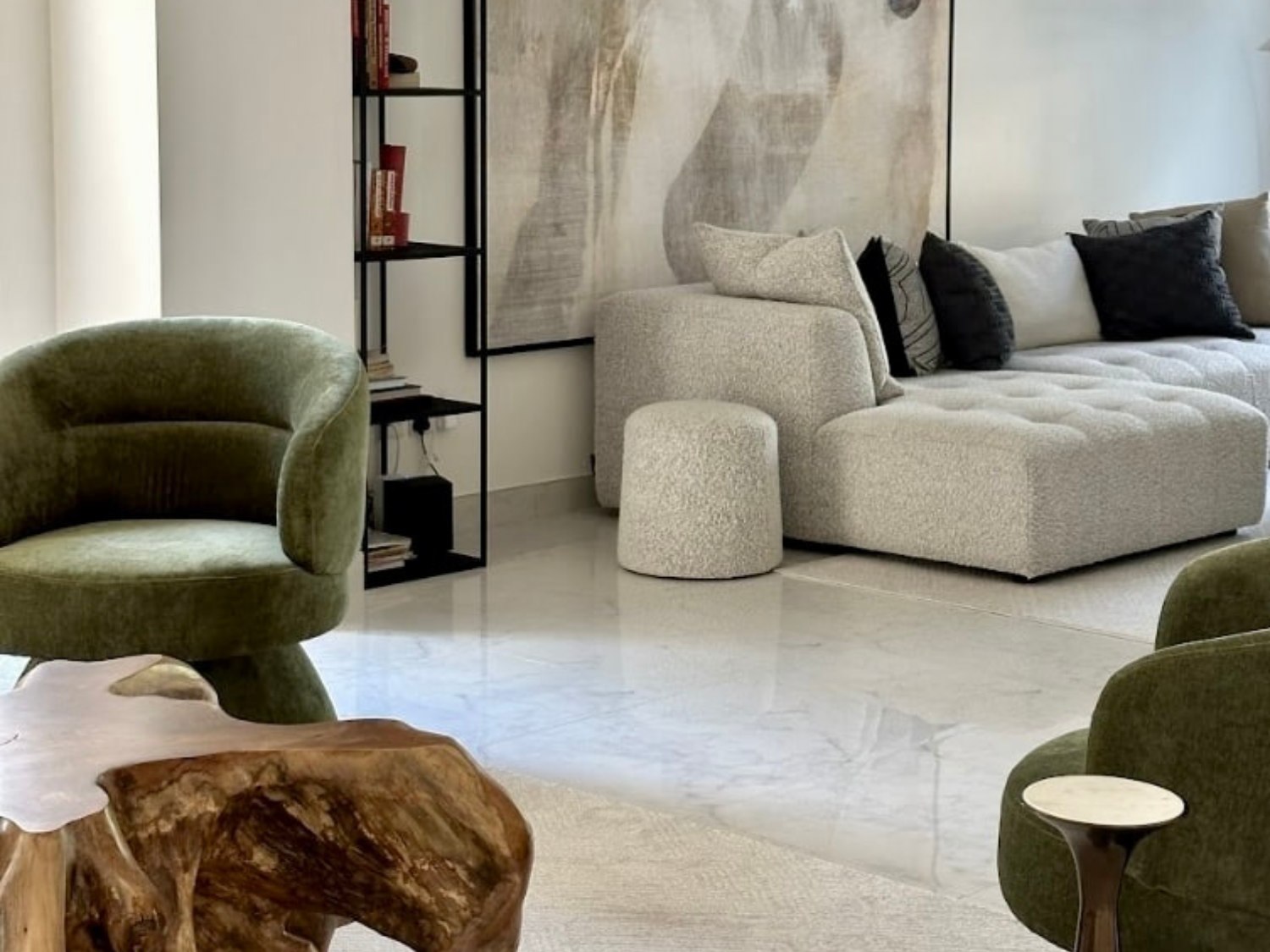
Comfort depends on how well a home manages heat throughout the day. In many older properties, this is where the problems start. Certain rooms overheat, cooling systems run constantly, and indoor temperatures vary from one space to another. Over time, this affects both daily comfort and energy costs.
While a villa’s orientation is rarely something that can be changed, its impact can be managed. Thoughtful shading, better insulation, and more considered window treatments ease the load on cooling systems. These interventions work with the building rather than against it, creating more stable internal conditions.
When heat gain is better controlled, the impact is immediate. Rooms hold a more even temperature, movement between spaces feels smoother, and comfort is maintained throughout the day with less effort. Over time, this balance improves both comfort and running costs, making the home easier to live in year-round.
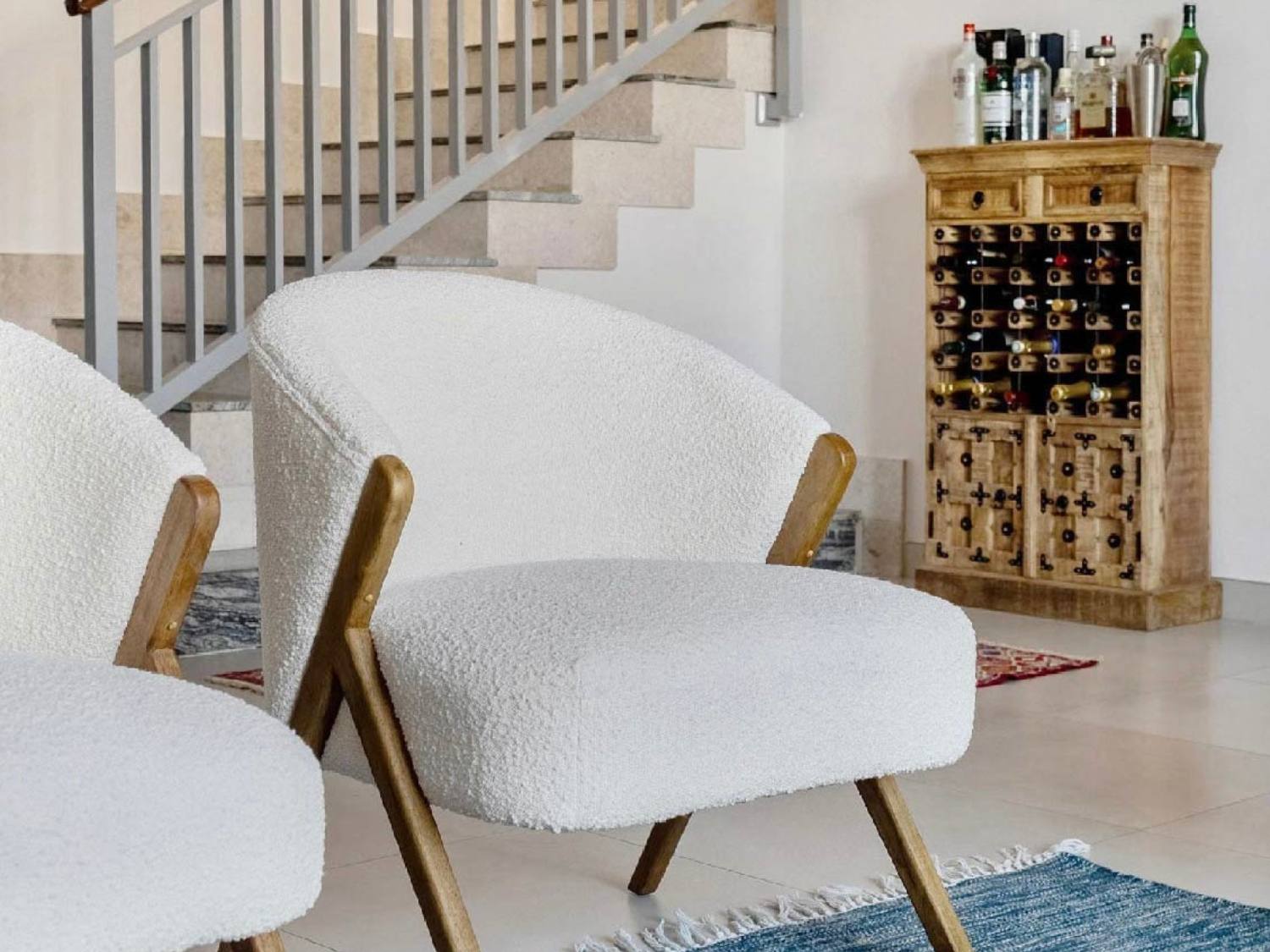
Many older villas still carry finishes that were chosen to impress rather than to support daily living. Glossy marble floors reflect light harshly, busy tiles compete for attention, and yellow-toned surfaces distort color and warmth throughout the home. Instead of creating clarity, these materials amplify brightness and visual noise.
Updating flooring and wall finishes can quietly reset the atmosphere of a villa. Softer surfaces absorb light more gently and allow spaces to feel calmer and more balanced. Materials with subtle texture, such as natural stone, muted wood tones, or smooth plastered walls, introduce warmth without visual weight. Over time, these finishes age gracefully, developing character rather than looking dated.
Durable, cooler surfaces suit the climate, while softer, tactile walls help temper the intensity of natural light. Together, these choices create interiors that feel grounded and composed, supporting everyday comfort without drawing attention to the materials themselves.
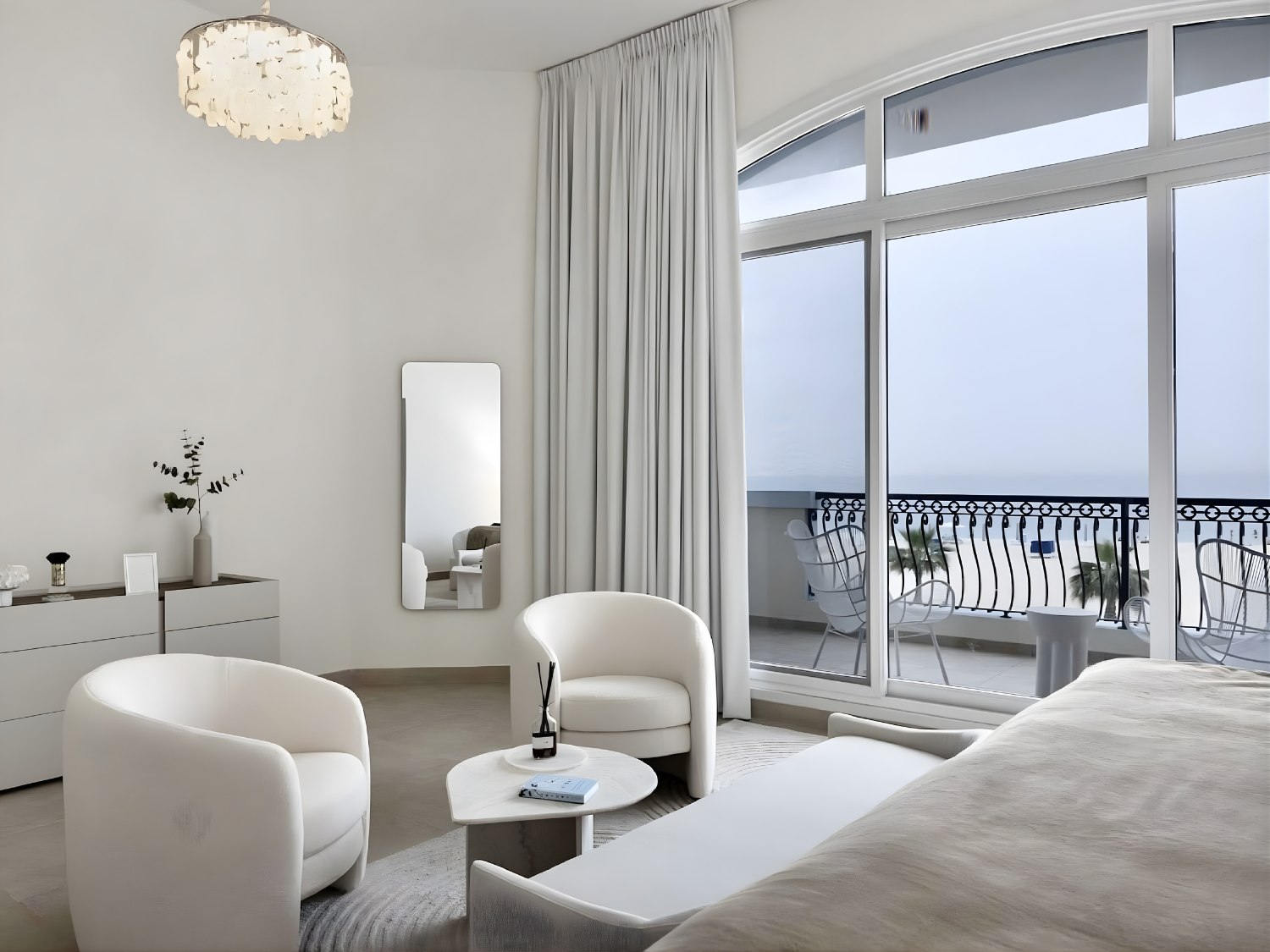
In Dubai villas, the challenge is rarely a lack of daylight. More often, interiors struggle with glare, sharp contrasts, and light that feels overwhelming rather than uplifting. Bright sun pours in from limited angles, leaving some areas washed out while others remain enclosed and underused.
Thoughtful light management brings daylight deeper into the home without intensifying it. When light is guided and diffused rather than left to fall harshly, transitions between spaces soften and interior areas feel more usable throughout the day. The aim is balance, not brightness.
Balanced light supports a calmer atmosphere. Diffused brightness allows materials, colours, and textures to read more naturally, creating spaces that feel refreshed without strain on the senses. In a climate defined by strong sun, this measured approach to light makes the home feel comfortable, composed, and inviting from morning to evening.
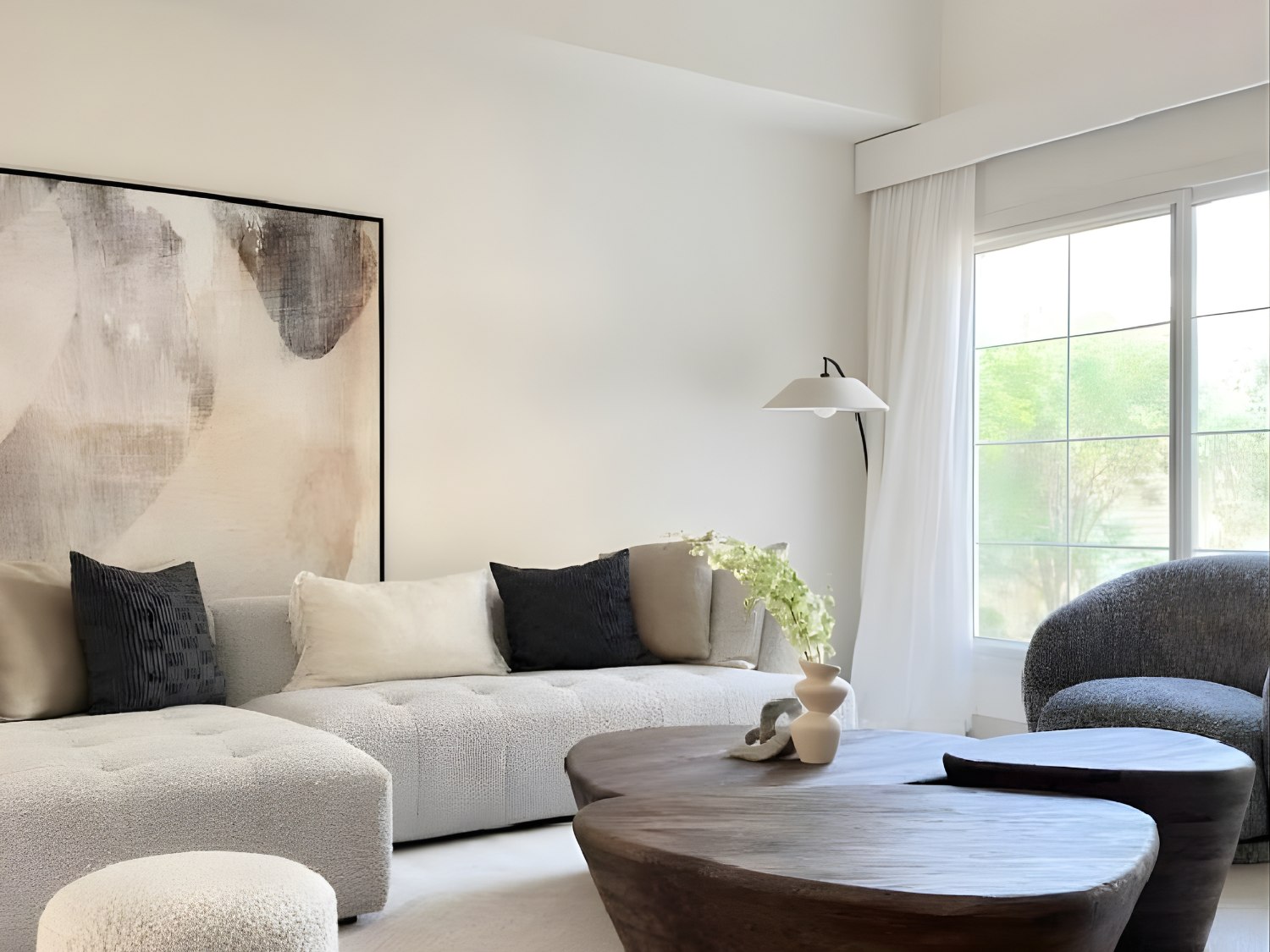
Older villas often lack moments of pause. Rooms flow into one another without clear direction, leaving spaces feeling undefined and difficult to read. Introducing a point of focus, or a moment that draws you in, can bring structure without forcing rigidity.
Some spaces benefit from a clear anchor, while others work better with quieter moments of engagement. A focal point might ground a room, while a subtle detail, an artwork, or a shift in material can invite attention without dictating use. What matters is that the space offers orientation rather than instruction.
When these moments are placed with intention, movement through the home feels more natural. Spaces no longer compete for attention or fade into the background. Instead, the home begins to unfold in a way that feels considered, allowing each area to hold its own without needing to announce its purpose.
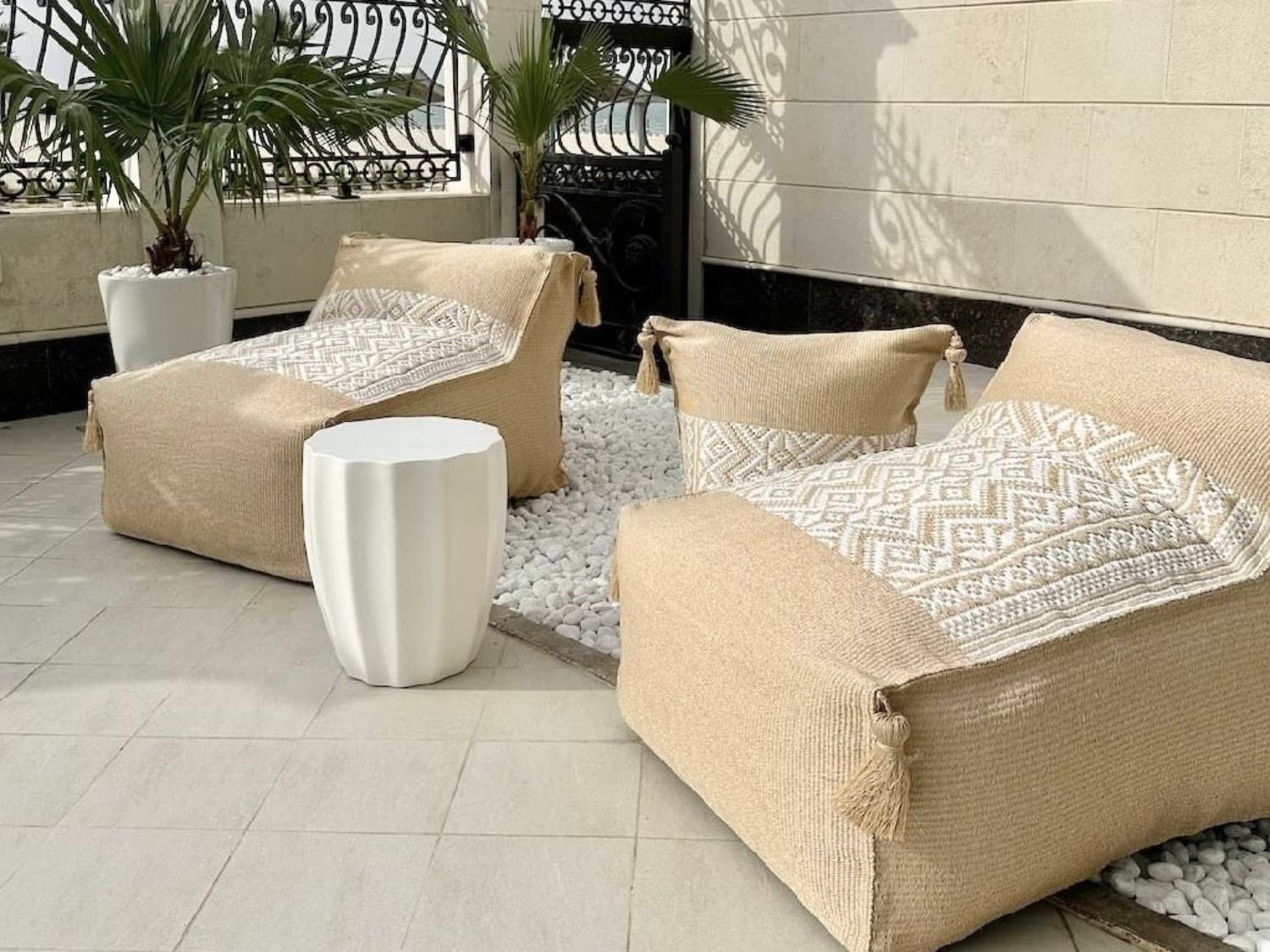
Rooms sometimes exist side by side without a clear relationship. Movement from one space to another can feel abrupt, as if each area was designed in isolation. When visual continuity is missing, the home loses its sense of flow and becomes harder to read as a whole.
A more cohesive experience emerges when spaces share a common rhythm. Repeated materials, measured shifts in texture, consistent lighting tones, and thoughtfully placed artwork allow the home to unfold naturally. Open walls extend sightlines, while elements like rugs or furniture that belong to specific zones quietly signal where one space ends and another begins.
When these cues are in place, the home feels easier to navigate. Rooms connect through feeling rather than instruction, allowing daily life to move smoothly from one area to the next. The villa begins to function as a connected environment, supporting comfort, clarity, and a steady sense of balance throughout the day.
Villa renovation is most effective when it responds directly to how life is lived today. Many Dubai villas still reflect patterns that no longer apply, and ignoring this gap only leads to superficial upgrades. Realignment does not depend on scale. Small, well-judged changes to circulation, light or materials can significantly improve how a home feels or functions, without losing its sense of identity. These changes support daily life in practical ways, making spaces feel calmer, more connected, and easier to live in.
Seen this way, renovation becomes a process of intention. Each choice responds to real needs, correcting what no longer works and reinforcing what does, which is the foundation of effective interior renovation services in Dubai.
Renovations that correct how a villa functions tend to hold value best. In Dubai, this usually means improving layouts, circulation, light control, and replacing outdated materials that no longer suit the climate or modern living. Homes that feel easy to live in and well resolved age far better than those driven by trends or cosmetic upgrades. Working with experienced interior design services in Dubai can help identify which corrections will have the most lasting impact.
Technically, a villa can be renovated in phases. I don’t recommend it.
Renovation involves noise, dust, disrupted services, and constant movement of people through the home. Even when work is phased, the impact tends to spill into daily life and quickly becomes exhausting. Many contractors will also recommend that clients move out during major works, and in most cases, this is the sensible option.
If you value your sanity and quality of life, living in a home during a full villa renovation is not something I recommend. Stepping out allows the work to move faster, decisions to be made more clearly, and the end result to be delivered without unnecessary strain.
Materials need to cope with heat, glare, and long-term wear. Surfaces that remain cool, finishes that soften strong light, and textures that hold up over time tend to perform best. The right choices support comfort and clarity throughout the year, and reduce the need for frequent updates.